
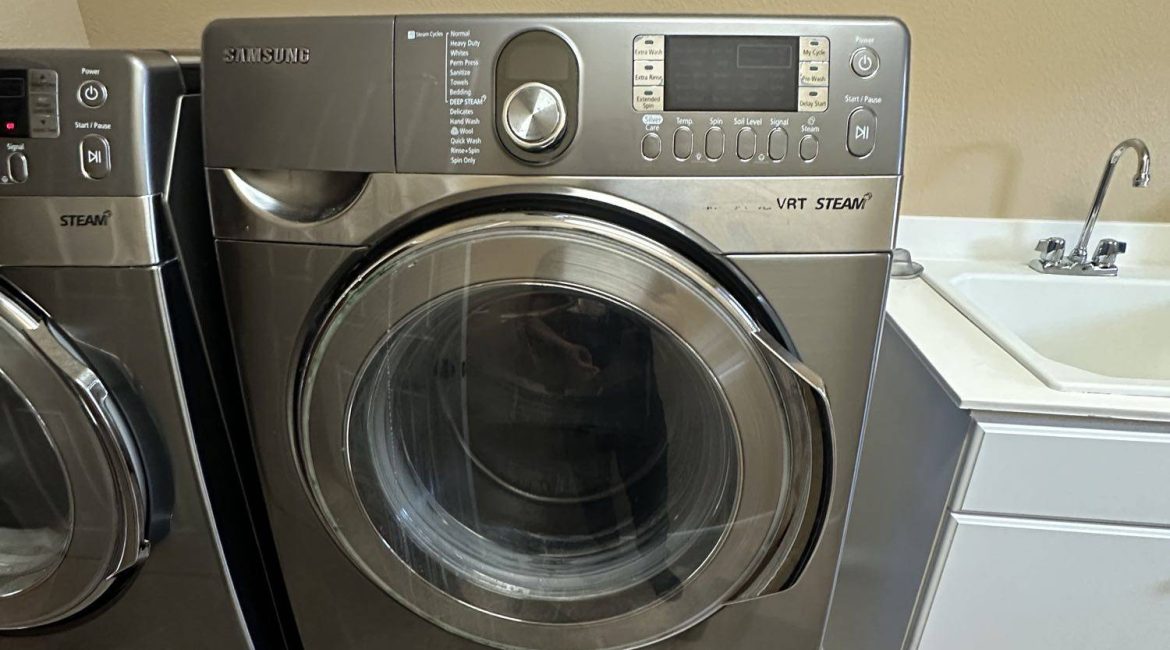
A washing machine that transitions from a slow wash cycle to a high-speed spin with violent jerks or abrupt acceleration is more than just a noisy nuisance. This behavior often indicates a breakdown in the communication between the machine’s “brain” and its “muscles.” When a drum kicks into high gear without the standard gradual ramp-up, it places immense strain on the drive belt, bearings, and suspension springs. If left unaddressed, these mechanical shocks can lead to catastrophic hardware failure or even cause the machine to “walk” across the floor, damaging surrounding cabinetry and flooring.
The Role of the Tachogenerator (Tacho Sensor)
The most frequent culprit behind abrupt spinning is a fault in the tachogenerator. This small component is typically mounted on the end of the motor shaft. Its primary function is to monitor the motor’s speed and send real-time data back to the electronic control module.
When the control module requests a specific RPM, it relies on the tacho sensor to confirm that the motor is spinning at that exact speed. If the sensor is loose, damaged, or has a faulty wiring connection, the control module receives no feedback. In an attempt to reach the desired speed, the module may send full power to the motor. Without the regulatory feedback loop, the motor spikes to maximum velocity instantly, causing the characteristic “jerk” or “kick” at the start of the cycle.
In many cases, the tacho sensor itself is fine, but the magnetic ring attached to the motor shaft has vibrated loose or cracked. Reseating or replacing this magnet can often restore smooth regulation.
Electronic Control Module Failures
If the sensors are providing accurate data but the machine still behaves erratically, the issue likely resides within the electronic control module (the PCB). This board acts as the central command center, utilizing components called TRIACs (Triode for Alternating Current) to regulate the amount of voltage sent to the motor.
A “shorted” TRIAC is a common failure point. When a TRIAC fails in a closed position, it allows unrestricted current to flow to the motor regardless of what the program dictates. This results in the motor spinning at full speed the moment it receives any power. Unlike a tacho sensor issue, which might cause a jerk followed by an error code, a faulty control board often results in consistent, uncontrolled high-speed spinning.
Motor Component Wear: Brushes and Commutators
For models using traditional brushed DC motors, the physical condition of the carbon brushes plays a significant role in smooth acceleration. As brushes wear down to their final millimeters, they may make intermittent contact with the commutator. This uneven electrical contact can cause the motor to stutter, arc, or suddenly surge as it tries to maintain a connection.
Furthermore, a build-up of carbon dust from wearing brushes can create “bridges” between the commutator segments. This leads to internal shorts within the motor, causing erratic torque delivery that manifests as jerky movements. Cleaning the motor and replacing worn brushes is a standard maintenance step that can resolve many regulation issues before the motor itself burns out.
Mechanical Impediments and Unbalanced Loads
While electronic regulation is usually the cause of abrupt starts, mechanical issues shouldn’t be ruled out. Modern machines use sophisticated software to detect unbalanced loads. If the suspension rods or shock absorbers are worn, the drum may bounce excessively during the distribution phase.
The control module may interpret this lack of stability as a need for more torque to “break through” the friction, leading to a sudden surge in power. However, if the jerking is strictly electrical in nature, you will notice the motor attempting to spin fast even when the drum is empty.
The Importance of Professional Diagnosis
Attempting to diagnose motor regulation issues involves working with high-voltage components and sensitive electronics. Misdiagnosing a faulty tacho sensor as a dead motor can lead to expensive, unnecessary replacements. Conversely, ignoring the signs of an erratic control board can lead to a motor burnout or a flooded laundry room if the drum’s violent shaking shears a water line.
Professional technicians use specialized multimeters and diagnostic software to track the voltage path from the control board to the motor, ensuring the root cause—whether it be a cracked magnet, a blown resistor, or a frayed wire—is identified accurately.
Expert Solutions in Poway
If your laundry routine has become a series of loud bangs and sudden jolts, it is time to seek professional intervention. A washing machine that cannot regulate its speed is a safety hazard and a threat to your clothing.
Poway Appliance Repair Service Center specializes in the complex electronics and mechanical systems of modern laundry appliances. Our experienced technicians provide comprehensive diagnostics for all major brands, focusing on motor regulation, control board repair, and sensor calibration. We ensure your machine returns to its quiet, efficient, and smooth operation.
Contact Poway Appliance Repair Service Center today to schedule a diagnostic appointment and protect your home from the damage caused by a malfunctioning appliance.
Contact us