
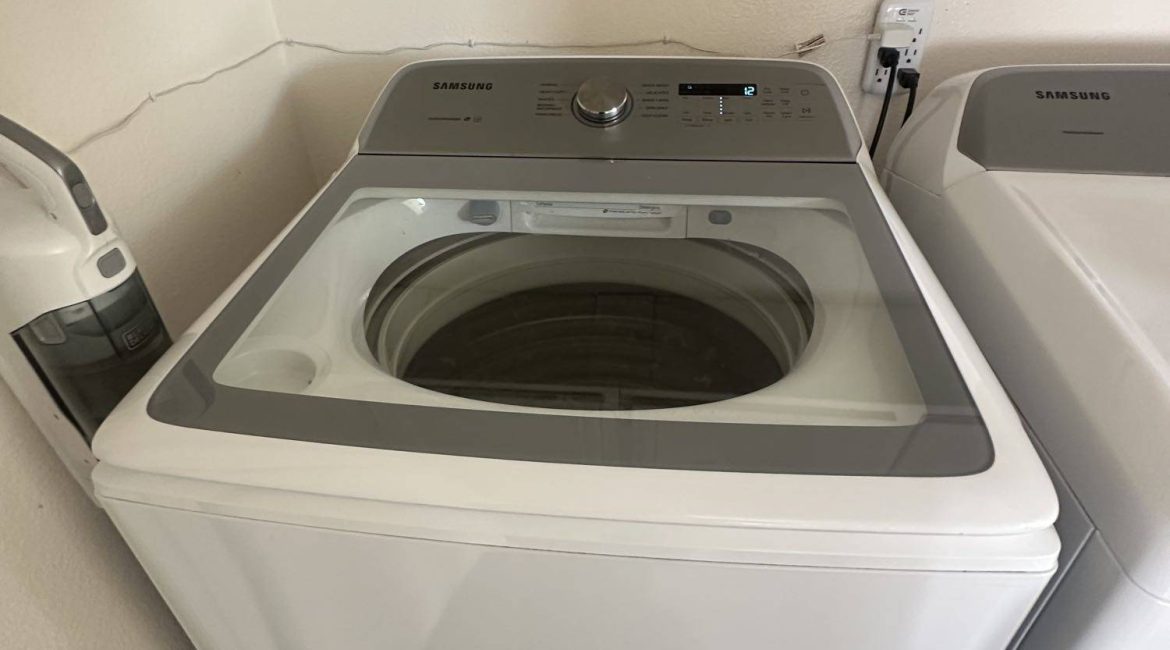
A washing machine drum that spins easily by hand but refuses to rotate during a wash cycle usually points to a mechanical or electrical failure inside the drive system. At first glance, the appliance may appear partially functional because it still fills with water, drains, or locks the door correctly. However, once the cycle begins, the drum either remains completely still or jerks slightly without completing a proper rotation.
This issue is common in both front-load and top-load washing machines and often develops gradually. Some owners notice weaker spinning performance first, while others suddenly find wet clothes sitting in a motionless drum. Understanding what causes this problem can help prevent further damage and determine whether professional repair is needed.
Why the Drum Still Moves by Hand
When the drum rotates manually without resistance, it usually means the tub itself is not jammed. The bearings are often still intact, and there is no object physically blocking movement. That narrows the problem down to components responsible for transferring power from the motor to the drum.
In a normal wash cycle, the motor generates rotational force, and the drive system transfers that movement through belts, pulleys, couplings, or direct-drive assemblies. If one part in that chain fails, the drum may stop moving entirely even though it feels free when turned manually.
Worn or Broken Drive Belt
One of the most common causes is a damaged drive belt. In belt-driven washing machines, the motor spins a rubber belt connected to the drum pulley. Over time, that belt can stretch, crack, slip, or snap completely.
Typical signs of a failing drive belt include:
- The motor can still be heard running
- The drum does not spin during wash or spin cycles
- Burning rubber smell during operation
- Weak or inconsistent drum movement
- Squealing noises before failure
A completely broken belt prevents any drum rotation at all. In some cases, the belt slips under load, causing intermittent spinning or weak agitation.
Replacing a belt may sound simple, but incorrect tension or pulley alignment can shorten the lifespan of the new component and strain the motor.
Faulty Washing Machine Motor
If the drive belt is intact, the next major suspect is the motor itself. Washing machine motors can fail because of overheating, worn internal windings, electrical surges, or long-term wear.
A defective motor may produce several symptoms:
- Humming without drum movement
- Clicking sounds during cycle start
- Drum attempting to move briefly
- Burning odor from underneath the machine
- Machine stopping mid-cycle
Some motors lose power gradually before failing completely. This can cause weak spinning performance for weeks before the drum stops moving altogether.
Modern washing machines also use inverter or variable-speed motors that communicate with electronic control boards. Diagnosing these systems often requires electrical testing equipment and manufacturer-specific knowledge.
Failed Motor Coupling
Certain top-load washers use a motor coupling instead of a belt. This small component connects the motor shaft directly to the transmission. It is designed to absorb vibration and protect the motor during overload conditions.
Motor couplings wear out over time and can crack under stress. When this happens, the motor may continue running while the drum remains stationary.
Common indicators include:
- Loud grinding noises
- Sudden loss of spinning ability
- Washer fills and drains normally
- Small rubber or plastic fragments underneath the unit
Ignoring a damaged coupling can eventually place excessive strain on the motor and transmission assembly.
Drive Pulley Problems
The drive pulley transfers rotational movement from the motor to the drum. If the pulley becomes loose, cracked, or worn, the drum may fail to rotate properly even when the motor operates normally.
A damaged pulley often creates:
- Rhythmic knocking sounds
- Belt slipping
- Uneven spinning
- Intermittent drum movement
Pulley issues may also accelerate belt wear and create additional vibration during high-speed spin cycles.
Worn Carbon Brushes
Older washing machine motors frequently use carbon brushes to conduct electricity inside the motor. These brushes wear down naturally over time. Once they become too short, the motor may lose power or stop functioning entirely.
Symptoms of worn brushes include:
- Drum starts inconsistently
- Machine works only on certain cycles
- Visible sparking near the motor
- Reduced spin speed
- Sudden failure after months of weak performance
Replacing carbon brushes early may restore normal operation and prevent more serious motor damage.
Defective Control Board or Wiring
In many modern washers, the drum motor depends on signals from an electronic control board. If the board fails or wiring connections become loose, the motor may never receive the command to rotate.
Electrical problems can appear as:
- Random cycle interruptions
- Error codes on the display
- Drum remaining still without noise
- Washer powering on but failing to begin agitation
- Intermittent operation
Because electronic failures can mimic motor problems, proper diagnostics are essential before replacing expensive components unnecessarily.
Why Continuing to Use the Washer Is Risky
Some homeowners continue restarting the machine repeatedly, hoping the issue will resolve itself. This can worsen the damage significantly.
A struggling motor may overheat and burn out completely. Slipping belts create additional friction and heat. Electronic failures can spread to other connected components. In severe cases, overloaded motors may damage control boards or wiring harnesses.
Using the machine while the drum fails to rotate also leaves clothing poorly cleaned and excessively wet, placing additional strain on the spin system.
Professional Diagnosis Makes a Difference
Modern washing machines combine mechanical systems, electronic controls, sensors, and high-speed motors. Multiple faults can produce nearly identical symptoms, which is why guessing often leads to unnecessary part replacements.
Professional technicians inspect:
- Motor performance
- Belt condition
- Pulley alignment
- Electrical continuity
- Control board communication
- Transmission operation
- Wiring integrity
Accurate diagnosis saves time and prevents repeated breakdowns.
Schedule Service with Poway Appliance Repair Service Center
If your washing machine drum moves freely by hand but refuses to rotate during the cycle, the problem may involve the motor, belt, coupling, pulley, or electronic drive system. Delaying repairs can increase wear and lead to more expensive failures.
The experienced technicians at Poway Appliance Repair Service Center provide professional diagnostics and reliable washing machine repairs for a wide range of brands and models. Whether the issue involves a failing motor, damaged drive components, or electrical faults, their team can identify the cause and restore proper operation quickly.
Call today to schedule expert washing machine repair service and keep small drive system problems from turning into major appliance failures.
Contact us