

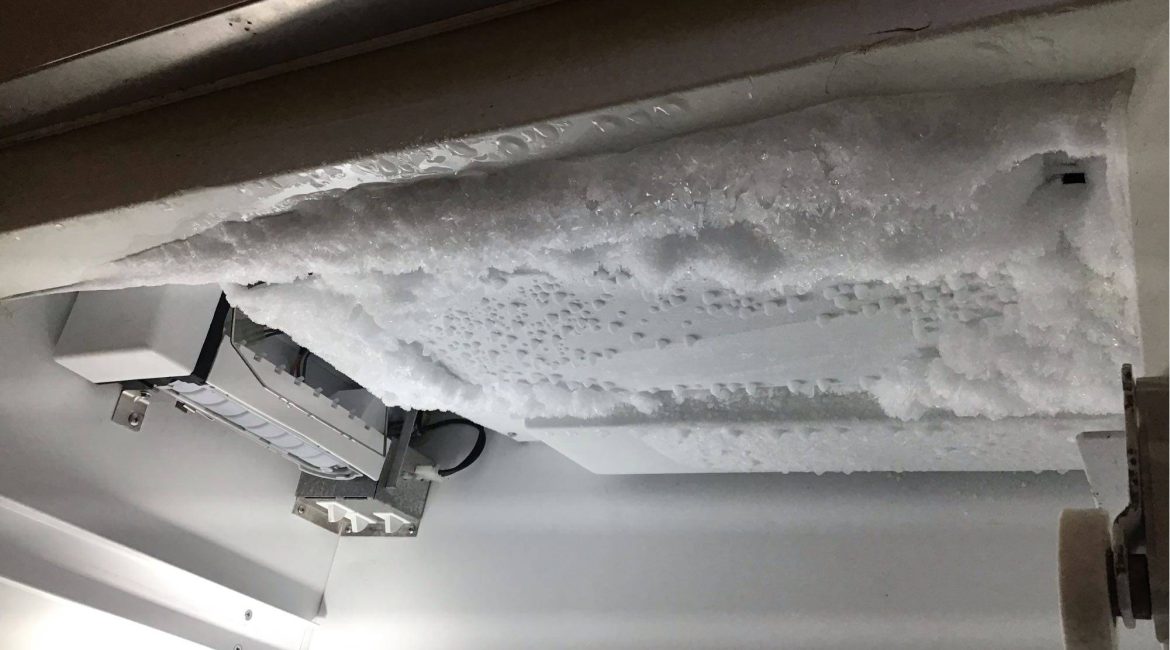
A KitchenAid refrigerator ice maker should produce solid, separate ice cubes that are easy to dispense. When water starts leaking into the ice bin, however, the cubes may freeze together into large clumps, making the dispenser difficult to use. You might also notice frozen puddles at the bottom of the container, unusual ice formations, or water dripping from the ice maker after a filling cycle.
This problem often develops when the fill tube becomes damaged, frozen, or misaligned, or when the water inlet valve fails to close completely. Understanding these possible causes can help prevent additional damage and determine when professional refrigerator repair is necessary.
Why Is Water Leaking into the Ice Bin?
A KitchenAid refrigerator ice maker operates by allowing a measured amount of water to enter the ice mold. Once the water freezes, the ice maker releases the cubes into the storage bin and prepares for another cycle.
If too much water enters the mold or water flows outside its intended path, it can spill directly into the ice bin. This excess water freezes around existing cubes, creating large blocks of ice that may prevent the dispenser from working properly.
Although the fill tube and water inlet valve are common suspects, incorrect water pressure, ice maker positioning, and control problems can produce similar symptoms.
Damaged or Misaligned Ice Maker Fill Tube
The fill tube directs water from the refrigerator’s supply system into the ice maker mold. When this tube becomes loose, cracked, or incorrectly positioned, water may miss the mold and flow into the storage container.
Small leaks can be difficult to notice because the water freezes quickly. Over time, repeated filling cycles create thick ice deposits around the ice maker and inside the bin.
A partially frozen fill tube may also redirect water, causing splashing or uneven filling. Ice buildup around the tube can interfere with normal operation and contribute to additional leakage.
A technician can inspect the fill tube for cracks, blockages, improper alignment, and damaged connections. Depending on its condition, repositioning or replacing the tube may restore proper water delivery.
Faulty Water Inlet Valve
The water inlet valve controls the flow of water into the refrigerator’s ice maker. During a normal filling cycle, the valve opens briefly and then closes to stop water entering the system.
When internal valve components become worn or damaged, the valve may fail to seal completely. Even a slow drip can gradually overfill the ice mold and allow water to leak into the ice bin.
Mineral deposits and debris can sometimes interfere with the valve’s sealing mechanism. A defective valve may also cause irregular ice cube sizes, continuous dripping, or excessive ice buildup.
Professional diagnosis helps determine whether the valve is leaking mechanically or receiving an incorrect electrical command. A mechanically leaking valve generally requires replacement rather than adjustment.
Water Pressure Problems
Water pressure also affects ice maker performance. Refrigerator inlet valves typically require water pressure within a manufacturer-specified operating range to function correctly.
If the pressure is too low, some valves may not close reliably. Excessively high pressure can contribute to filling problems and stress water connections.
A clogged refrigerator water filter, restricted supply line, or household plumbing issue may affect water delivery. However, not every pressure problem produces leakage, so checking the complete water supply system is important.
A qualified technician can measure incoming pressure and compare it with the requirements for the specific KitchenAid refrigerator model.
Signs Your KitchenAid Ice Maker Needs Repair
Water leaking into the ice bin often produces several noticeable symptoms before the problem becomes severe.
Ice cubes may stick together, forming large frozen clusters that cannot pass through the dispenser. You might find a solid layer of ice at the bottom of the storage container or notice that newly produced cubes have irregular shapes.
Other warning signs include dripping after the filling cycle, ice accumulating around the fill tube, repeated dispenser jams, and unusual amounts of frost near the ice maker.
If water escapes beyond the ice bin, it may reach surrounding refrigerator components or create additional freezing problems.
These symptoms should not be ignored, especially when leakage continues after the ice bin has been emptied and cleaned.
What Can You Check Before Calling a Technician?
Start by removing the ice bin and examining it for frozen puddles or unusually large ice formations. Emptying the container can help reveal whether the leakage returns during subsequent ice making cycles.
Check that the ice bin is correctly installed and that nothing visibly obstructs the ice maker. If accessible without disassembly, inspect the fill tube opening for obvious ice buildup or misalignment.
Avoid using sharp tools to remove ice because they can damage plastic components, water lines, and the ice maker assembly.
If water continues entering the ice maker when it should be inactive, turn off the ice maker and close the refrigerator’s water supply valve. Do not attempt electrical repairs without appropriate training.
Professional KitchenAid Refrigerator Ice Maker Repair
Proper repairs begin with identifying where the water originates. A technician may examine the fill tube, test the water inlet valve, measure water pressure, and evaluate the ice maker’s filling operation.
The inspection may also include checking electrical controls, water line connections, and the condition of nearby components.
Once the cause is identified, the technician can recommend replacing damaged parts, correcting tube positioning, or resolving supply problems.
Addressing the original failure is essential because simply removing frozen ice from the bin will not prevent leakage from returning.
Schedule KitchenAid Refrigerator Repair Today
A leaking ice maker can quickly turn normal ice production into a frustrating problem. Prompt attention can help prevent repeated dispenser jams, excessive ice buildup, and possible water damage.
If your KitchenAid refrigerator ice maker leaks into the ice bin, contact Poway Appliance Repair Service Center for professional refrigerator diagnostics and repair.
Schedule your KitchenAid refrigerator ice maker service today and restore reliable ice production without unwanted water leaks.
