
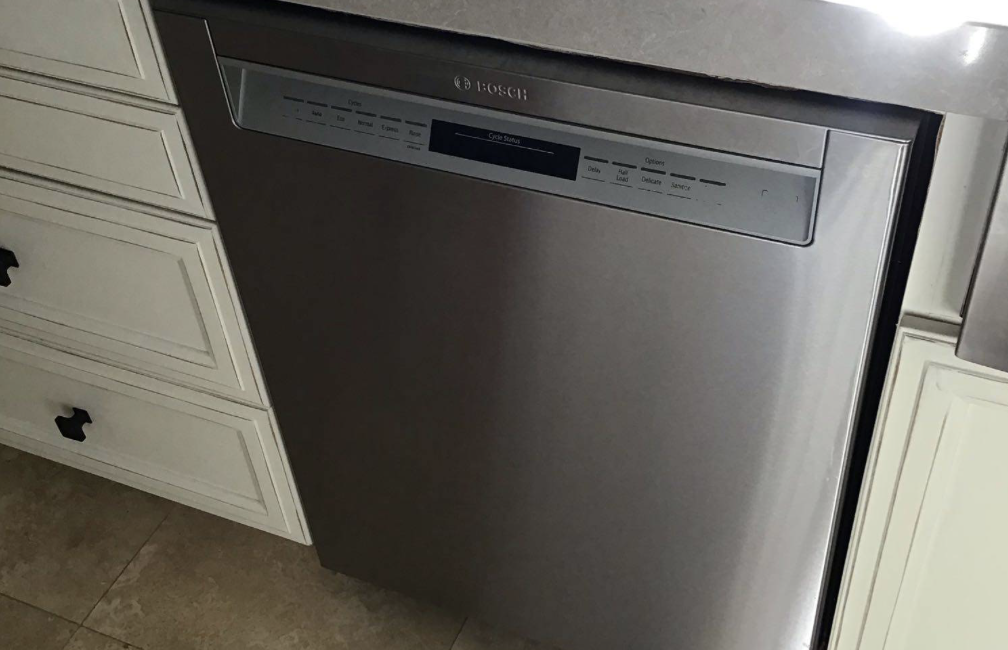
A Bosch dishwasher is designed to leave dishes clean and nearly dry at the end of every wash cycle. If you consistently open the door and find glasses, plates, and utensils covered with water droplets, something in the drying system may not be working correctly. While a few drops on plastic containers can be normal, excessive moisture on all dishes usually points to a mechanical or electrical issue that requires attention.
Several components work together during the drying process. If even one of them fails, the dishwasher may complete the wash cycle successfully but leave dishes wet. Two of the most common causes are a faulty heating element and a malfunctioning rinse aid dispenser. Understanding how these parts work can help you determine whether your Bosch dishwasher needs professional repair.
How Bosch Dishwashers Dry Dishes
Unlike older dishwashers that rely solely on exposed heating elements, many Bosch models use a condensation drying system. During the final rinse, hot water heats the dishes. As the stainless steel interior cools more quickly than the dishes themselves, moisture condenses on the walls of the tub instead of remaining on the dishes.
This process depends on several conditions. The water must reach the proper temperature, the rinse aid must reduce surface tension so water sheets off the dishes, and every component involved in the final rinse must operate correctly. If any part fails, drying performance suffers.
Faulty Heating Element
Although Bosch dishwashers often use condensation drying, many models still rely on a heating element to raise the water temperature during parts of the cycle. If the heating element is damaged or no longer heats efficiently, the dishes will not become hot enough for effective drying.
Common signs of a heating element problem include:
- Dishes remain wet after every cycle.
- Water inside the dishwasher feels only lukewarm.
- Longer cycles produce the same poor drying results.
- Plastic and ceramic dishes stay equally wet.
- The dishwasher cleans normally but never dries properly.
Heating elements can fail because of age, mineral buildup, electrical damage, or internal breaks that are not visible without testing. A technician can measure the element’s electrical resistance to determine whether it is operating correctly.
Problems with the Rinse Aid Dispenser
The rinse aid dispenser plays a much bigger role than many homeowners realize. Rinse aid reduces the surface tension of water so it flows off dishes instead of forming droplets. Without enough rinse aid, water clings to glassware, plates, and silverware, leaving everything wet at the end of the cycle.
A faulty dispenser may fail to release rinse aid even if the reservoir is full.
Symptoms include:
- Water spots on glasses.
- Wet dishes after every load.
- Cloudy glassware.
- Water pooling in cups or bowls.
- No noticeable decrease in rinse aid level over multiple cycles.
Sometimes the dispenser door becomes stuck. In other cases, the internal release mechanism or electronic controls stop functioning correctly.
Incorrect Loading Can Affect Drying
Even when every component works properly, improper loading can reduce drying performance.
Avoid these common mistakes:
- Overloading the racks.
- Nesting bowls together.
- Blocking air circulation.
- Placing lightweight plastic containers upside down.
- Allowing large items to cover smaller dishes.
Following Bosch loading recommendations helps hot air circulate more effectively during the drying phase.
Water Temperature Matters
Your dishwasher depends on hot incoming water. If your home’s water heater is set too low or the dishwasher starts before hot water reaches the kitchen sink, drying performance may suffer.
Ideally, incoming water should be around 120°F (49°C). Running the kitchen faucet until hot water arrives before starting the dishwasher can improve both cleaning and drying results.
Other Possible Causes
If the heating element and rinse aid dispenser are functioning properly, other components could also contribute to poor drying.
These include:
- Faulty thermostat.
- Defective temperature sensor.
- Control board problems.
- Vent assembly failure.
- Damaged wiring.
- Circulation pump issues affecting water temperature.
Because these problems require electrical testing, professional diagnosis is recommended.
Can You Fix the Problem Yourself?
There are a few maintenance steps homeowners can safely perform.
First, verify that rinse aid is present and the dispenser is correctly adjusted. Clean the dispenser opening if detergent residue has accumulated. Check that spray arms rotate freely and that the filter is clean. Also verify that your water heater is supplying adequately hot water.
However, replacing heating elements, sensors, wiring, or electronic control boards involves electrical components that should be handled by trained technicians.
Attempting these repairs without proper tools may result in incorrect installation or further damage to the dishwasher.
When to Schedule Professional Repair
If your Bosch dishwasher consistently leaves dishes wet despite using rinse aid and loading dishes correctly, professional service is the best solution. Continuing to run the dishwasher with a failing heating component or defective dispenser may increase energy consumption and eventually lead to additional component failures.
An experienced appliance technician can quickly determine whether the heating element, dispenser, thermostat, control board, or another component is responsible. Accurate diagnosis prevents unnecessary part replacements and restores your dishwasher’s drying performance.
Trust Poway Appliance Repair Service Center
If your Bosch dishwasher dishes come out wet after every cycle, don’t ignore the warning signs. Whether the problem involves a faulty heating element, a malfunctioning rinse aid dispenser, or another drying system component, the experienced technicians at Poway Appliance Repair Service Center can help.
We diagnose Bosch dishwasher problems accurately, use quality replacement parts, and complete repairs efficiently so your appliance performs as it should. Contact Poway Appliance Repair Service Center today to schedule professional dishwasher repair and enjoy spotless, dry dishes after every wash cycle.
Contact us