
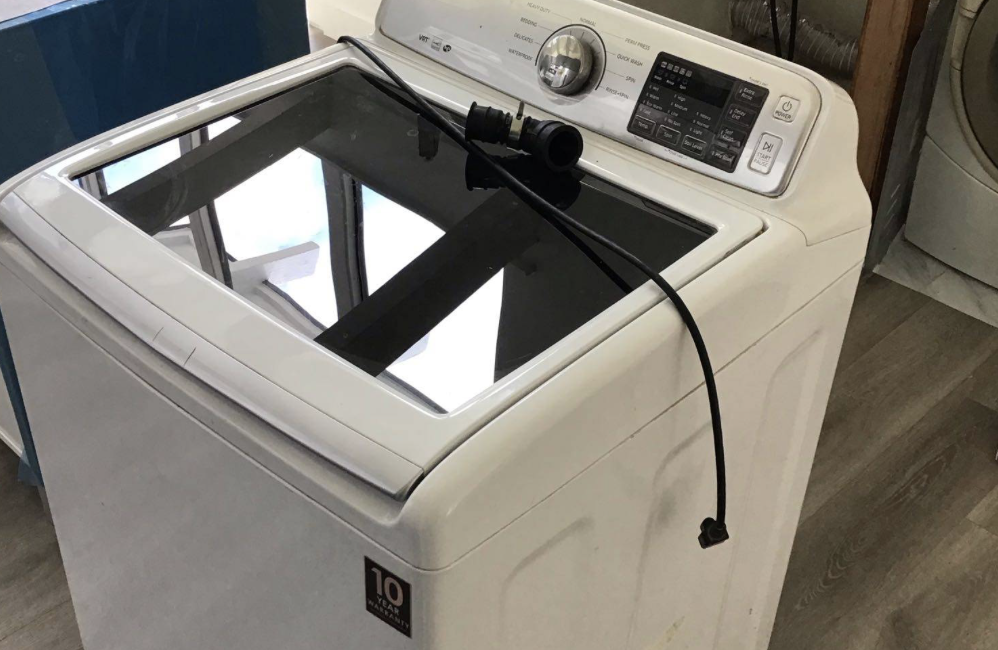
A GE washing machine may move slightly during the spin cycle, especially at high speed. However, excessive shaking, rocking, banging, or walking across the floor indicates that something is wrong. If the washer becomes unusually unstable whenever the drum spins, the problem may involve the shock absorbers, suspension components, leveling system, or another part responsible for keeping the tub balanced.
Ignoring severe vibration can lead to additional damage. Repeated movement places stress on the washer cabinet, hoses, tub assembly, motor, bearings, and other components. Identifying the source early can prevent a relatively manageable repair from becoming a more expensive service call.
Why Does a GE Washing Machine Shake During Spin?
During the spin cycle, the drum rotates rapidly to remove water from clothing. The suspension system is designed to absorb movement and keep the tub centered inside the cabinet. When these components work correctly, the washer may vibrate slightly but should remain stable.
Excessive shaking can occur when the suspension system is worn, the washer is not level, or the load inside the drum becomes uneven. In some cases, the problem is simple enough for a homeowner to correct. If the washer continues to shake after basic checks, a professional inspection is recommended.
Worn Shock Absorbers
Shock absorbers help control the movement of the tub as the drum accelerates and decelerates. With regular use, these components can become worn or lose their ability to dampen movement effectively.
A GE washer with failing shock absorbers may shake much more severely during high-speed spin. You may also hear banging or notice the tub moving farther than usual inside the cabinet.
The problem can become more noticeable when washing heavier items such as towels, blankets, or jeans. If the washer is level and the load is distributed correctly but the machine still vibrates excessively, worn shock absorbers are one possible cause.
Suspension Components May Be Damaged
Depending on the GE washer model, the tub may be supported by suspension rods, springs, dampers, or related components. These parts keep the tub positioned correctly while allowing controlled movement.
A damaged, stretched, disconnected, or worn suspension component can cause the tub to become unstable. The washer may shake during spin, make unusual knocking sounds, or repeatedly move toward one side of the cabinet.
A technician can inspect the suspension system and determine whether individual components need to be replaced or whether another part is responsible for the instability.
The Washer May Not Be Level
Before assuming that a mechanical component has failed, check whether the washer is sitting evenly on the floor. A machine that is slightly tilted can become extremely unstable during the spin cycle.
Place the washer on a firm, level surface and check the adjustable feet. Each foot should make solid contact with the floor. If the appliance rocks when you push it gently from different sides, the feet may need adjustment.
However, leveling will not solve every vibration problem. If the washer was previously stable and suddenly started shaking, a worn or damaged internal component may be more likely.
An Unbalanced Load Can Cause Severe Vibration
A single heavy item can collect on one side of the drum and create an uneven load. This can cause the washer to shake or repeatedly attempt to redistribute the clothing.
Try stopping the cycle and spreading the items evenly around the drum. Avoid washing one large, heavy item by itself if the manufacturer’s instructions recommend balancing it with other suitable garments.
If the washer shakes excessively even with normal, evenly distributed loads, the issue should be investigated further.
Other Possible Causes
Although suspension problems are common possibilities, excessive vibration can have other causes. A damaged tub bearing, loose counterweight, worn basket support, or problem with the tub assembly can also affect stability.
A loose counterweight may produce strong banging during spin. Bearing problems can cause unusual rumbling or grinding sounds along with vibration. In some cases, damage to the inner basket or mounting components can make the washer unstable.
Because several failures can produce similar symptoms, replacing suspension parts without diagnosing the washer first may waste time and money.
Signs Your GE Washer Needs Professional Repair
Consider scheduling an inspection if your washer:
- Shakes violently during almost every spin cycle
- Moves across the floor
- Produces repeated banging or knocking sounds
- Becomes unstable even with balanced loads
- Has a tub that appears unusually loose
- Continues vibrating after the feet have been adjusted
- Suddenly developed severe vibration after previously operating normally
Continued operation under these conditions can place additional stress on the appliance. A professional technician can examine the suspension system, shock absorbers, tub, bearings, mounting points, and other components to identify the actual source of the problem.
Professional GE Washer Repair in Poway
If your GE washing machine is shaking excessively during the spin cycle, the problem may be related to worn shock absorbers, suspension components, an unbalanced tub, or another mechanical failure. A proper diagnosis is the best way to determine which part needs attention.
For dependable appliance repair, contact Poway Appliance Repair Service Center to schedule professional service. A technician can inspect your GE washer, identify the cause of the excessive vibration, and recommend the appropriate repair.
Don’t let a washer that shakes violently continue operating until the problem becomes more serious. Order service from Poway Appliance Repair Service Center and get your GE washing machine checked.
Contact us