
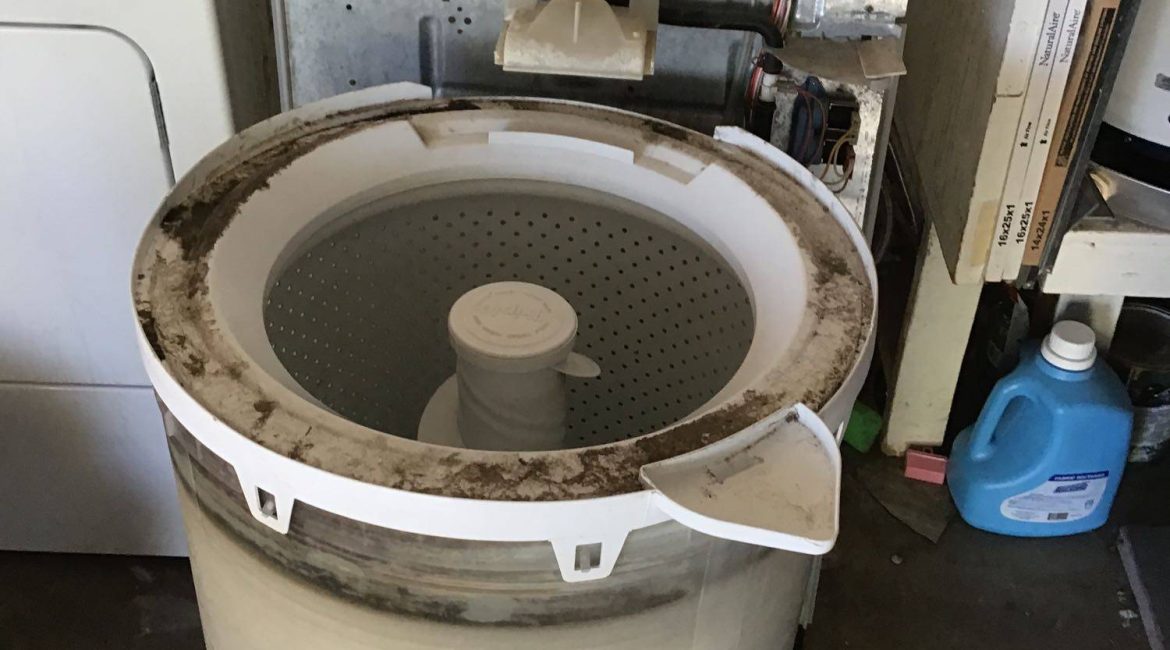
There is a specific kind of frustration that occurs when you realize your washing machine has been humming or sitting idle for an hour, yet the clothes inside are still soaking wet and soapy. When a washing machine refuses to advance to the next cycle stage—moving from wash to rinse, or rinse to spin—it effectively brings your household productivity to a standstill. While mechanical issues like broken belts or clogged pumps are common culprits, the most complex reasons usually involve the “brains” of the machine: the timer or the electronic control board.
Understanding the Control Center: Timer vs. Control Board
Before diving into repairs, it is essential to understand which system governs your appliance. Older washing machines, often referred to as “analog” models, utilize a mechanical timer. This is a motorized component with a series of internal gears and electrical contacts that physically click through the stages of a cycle.
In contrast, modern high-efficiency machines rely on an Electronic Control Board (ECB). This is essentially a small computer that receives data from sensors (water level, temperature, lid lock) and sends electrical signals to the motor and valves. If your machine has a digital display and touch buttons, it uses a control board. If it has a physical dial that moves as the wash progresses, it likely uses a mechanical timer.
Common Symptoms of Timer Failure
A mechanical timer is a marvel of engineering, but its moving parts are prone to wear. If the internal motor that turns the dial fails, the timer will “stick” in one position indefinitely.
- Stripped Gears: You may hear a faint grinding noise, or the dial may feel “loose” when you try to turn it manually.
- Burnt Contacts: The timer uses metal points to complete electrical circuits. Over years of use, these points can arc and develop carbon buildup, preventing electricity from reaching the drain pump or spin motor.
- Manual Intervention Required: If you find yourself having to nudge the dial forward a fraction of an inch to get the machine to start the next stage, the timer is almost certainly failing.
The Complexity of Control Board Issues
Electronic control boards are more sensitive than mechanical timers. They are susceptible to damage from power surges, moisture, and vibration. Because the board manages every facet of the machine, a failure here can manifest in unpredictable ways.
- Software Glitches: Sometimes the board simply “hangs,” much like a frozen laptop.
- Solder Joint Failure: Constant vibration from the spin cycle can cause tiny cracks in the soldering on the board, breaking the connection to specific components.
- Relay Failure: The board uses relays to switch high-voltage components on and off. If the rinse-cycle relay burns out, the machine will finish the wash and then sit indefinitely, waiting for a signal that never comes.
Secondary Culprits to Rule Out
Before condemning the timer or control board, professionals always check the peripheral sensors. A washing machine is designed with “gatekeepers.” For example, if the lid switch or door lock is faulty, the machine will refuse to advance to the spin cycle for safety reasons. Similarly, if the water level sensor (pressure switch) fails to report that the tub is empty, the control board will never trigger the next stage because it believes the machine is still full of water.
Why Professional Diagnosis Matters
Attempting to DIY a control board or timer replacement can be a costly gamble. Modern control boards are often non-refundable once the packaging is opened, and they can cost upwards of $200 to $400. A professional technician uses specialized multimeters to test for continuity and voltage. They can determine if the board is truly dead or if a simple $20 sensor is simply giving the board the wrong information.
Furthermore, many modern machines require “re-flashing” or programming the new board to match the specific model number. Without the correct proprietary software, a brand-new board is little more than a plastic brick.
Reliable Solutions in Poway
Don’t let a stalled laundry day ruin your week. If your washing machine is stuck in a loop or refusing to move to the next stage, it is time to call in the experts. Poway Appliance Repair Service Center specializes in diagnosing complex electrical issues in all major brands. Our technicians bring the tools and expertise necessary to identify whether you need a simple calibration, a timer repair, or a full board replacement.
Contact Poway Appliance Repair Service Center today to schedule your diagnostic appointment and get your laundry back on track.
Contact us