

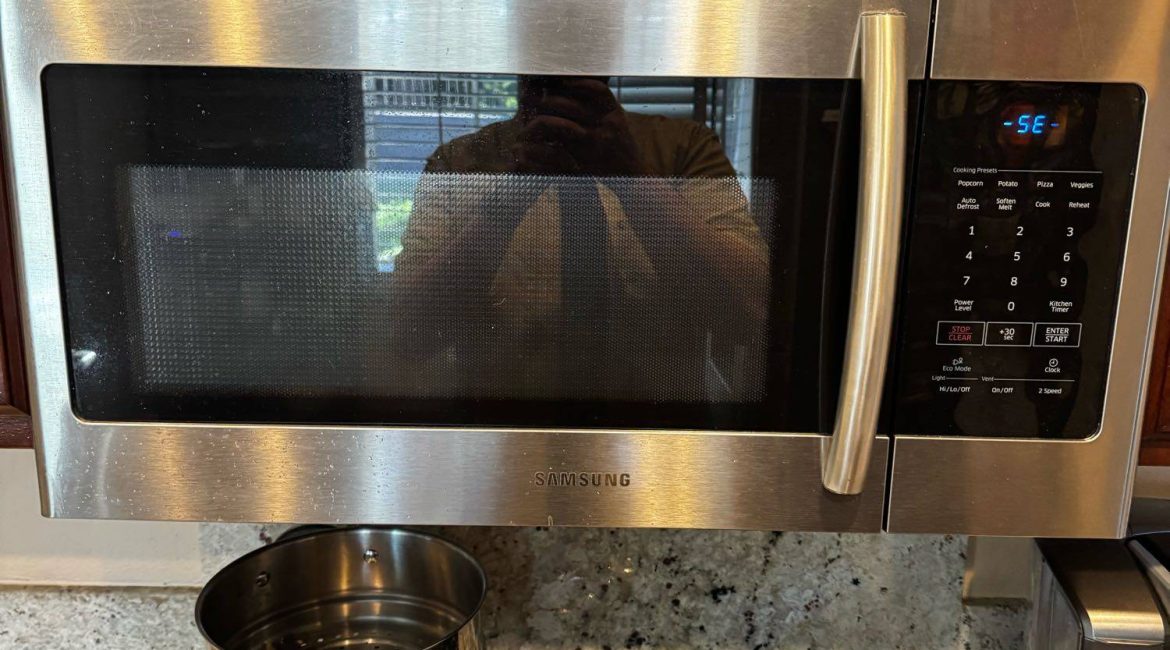
You place your leftovers in the microwave. The plate spins. The light turns on. The timer counts down. When the cycle ends, part of the meal is steaming hot, another section is barely warm, and one corner is still cold.
Most homeowners blame the dish. “It must be cheap cookware.” “Maybe this container isn’t microwave-safe.” While cookware can affect heating slightly, inconsistent results are rarely caused by the plate itself. In most cases, unpredictable heating is an early warning sign that something inside the microwave is no longer functioning the way it should.
Understanding why this happens can help you avoid bigger repairs — and keep your kitchen running efficiently.
How Microwave Heating Actually Works
Microwaves heat food using electromagnetic waves generated by a component called the magnetron. These waves bounce around the interior cavity and are distributed by a waveguide and, in many models, a stirrer fan. The turntable rotates food to expose different areas to energy, helping heat distribute evenly.
When all systems work together, heating feels balanced and predictable. But when even one component begins to weaken, the energy pattern changes — and that’s when you notice inconsistent results.
Common Causes of Unpredictable Heating
- Weakening Magnetron
The magnetron is the heart of the microwave. Over time, it can degrade. When this happens, it may still generate waves — but not at full strength. Instead of steady energy output, you get fluctuating power. Some areas of food heat intensely while others remain cold. - Failing High-Voltage Components
The capacitor or diode that supports the magnetron may begin to fail. This doesn’t always stop the microwave from running. It may hum normally and appear functional, yet deliver inconsistent heating patterns. - Waveguide or Stirrer Issues
Microwaves rely on proper wave distribution. If the stirrer fan isn’t spinning correctly or if the waveguide is obstructed by grease buildup, burned residue, or minor internal damage, energy flow becomes uneven. - Turntable Motor Problems
A slow or slipping turntable motor can reduce rotation consistency. Even slight hesitation in movement can cause repeated exposure to certain areas while leaving others underheated. - Sensor or Control Board Drift
Modern microwaves use sensors and control boards to regulate power cycles. If calibration drifts, the microwave may pulse energy unevenly, creating hot and cold zones within the same dish.
Why It’s Not Just Cookware
Yes, certain materials absorb or reflect microwave energy differently. But when heating patterns become unpredictable across multiple containers, the cookware theory falls apart.
If you’ve tested different microwave-safe dishes and still experience:
- Hot edges and cold centers
• Random cold pockets
• Food overheating in one spot
• Longer cooking times than before
The issue likely lies inside the appliance.
Ignoring the signs can lead to complete failure later. A weakening magnetron, for example, rarely fixes itself. Instead, performance gradually declines until heating becomes unreliable or stops altogether.
Hidden Risks of Inconsistent Heating
Beyond frustration, uneven heating can create practical and safety concerns:
- Undercooked food may not reach safe internal temperatures
• Reheated leftovers may contain cold bacterial pockets
• Longer run times increase energy consumption
• Overheating certain sections can dry out or damage food texture
Over time, struggling components also place strain on surrounding electrical parts, increasing the likelihood of a more expensive repair.
Why Early Diagnosis Matters
Microwaves are often overlooked because they appear simple. If the light turns on and the plate spins, most people assume everything is fine. But heating performance tells a deeper story.
Professional diagnostics can measure magnetron output, inspect high-voltage systems, test control boards, and evaluate distribution mechanisms. Catching minor degradation early often prevents larger component failures.
In many cases, the fix is more straightforward than homeowners expect. Replacing a failing diode, recalibrating sensors, or cleaning internal wave pathways can restore consistent performance.
When to Call for Service
Consider professional service if you notice:
- Increasing cooking times
• Uneven heating across multiple meals
• Food repeatedly overheating in one area
• A louder or unusual humming sound
• Burning smells unrelated to food
The longer inconsistent performance continues, the more strain internal components experience.
The Cost of Waiting
Waiting until the microwave completely stops working often means dealing with more extensive internal damage. A small component imbalance can cascade into a larger electrical issue.
Instead of replacing the entire appliance prematurely, a timely inspection can extend its lifespan and restore reliable performance.
Reliable Heat Shouldn’t Be a Guess
A properly functioning microwave should produce consistent, predictable results. You shouldn’t have to rotate your plate manually, pause cycles halfway through, or guess whether the center is safe to eat.
If your microwave heats food but delivers unpredictable results, don’t assume it’s cheap cookware. The problem may be internal — and fixable.
For accurate diagnostics and dependable repairs, contact Poway Appliance Repair Service Center. Our experienced technicians identify the root cause, restore proper wave distribution, and ensure your microwave operates safely and efficiently again.
Schedule your service today and bring consistency back to your kitchen.
Contact us