
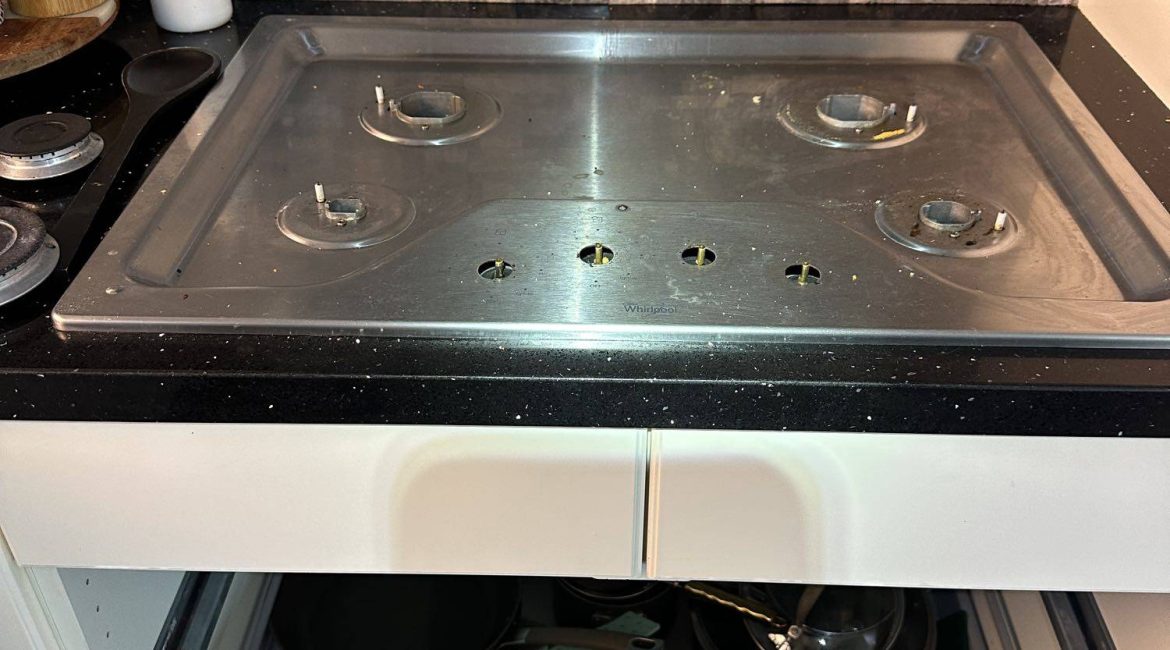
A gas stove is the heart of the kitchen, providing the immediate, controllable heat that home chefs rely on. However, when that steady blue flame begins to “lift” or hover above the burner ports rather than sitting firmly on them, it is more than just a culinary nuisance—it is a sign of an underlying mechanical or supply issue. A lifting flame can lead to uneven cooking, delayed ignition, or even the release of unburned gas into your home.
Understanding why a flame lifts requires a look at the delicate balance between gas pressure and the primary air mixture.
The Physics of the Perfect Flame
To burn efficiently, a gas stove requires a specific ratio of fuel to oxygen. This happens in the venturi tube, where gas is injected through a small orifice, drawing in surrounding air (primary air) before reaching the burner head.
A healthy flame should be stable, blue, and seated directly on the burner ports. When the velocity of the gas-air mixture exiting the burner ports exceeds the “burning velocity” (the speed at which the flame travels back toward the fuel source), the flame is pushed upward. This phenomenon is known as flame lifting.
Primary Cause: Excessive Gas Pressure
The most common culprit behind a lifting flame is high gas pressure. Your stove is designed to operate within a specific pressure range, usually measured in inches of water column (WC).
- Regulator Failure: Every gas range has a pressure regulator designed to stabilize the flow of gas from your home’s main line to the appliance. If the diaphragm inside this regulator fails or is stuck, it may allow gas to flow at a much higher pressure than the burner can handle.
- Incorrect Orifice Size: If you have recently converted your stove from Natural Gas to Liquid Propane (or vice versa) and didn’t swap out the brass orifices, the gas flow will be incorrect. Propane requires a much smaller orifice than natural gas because it is delivered at higher pressure.
- Utility Issues: Occasionally, the surge comes from the utility provider’s external regulator, though this typically affects all gas appliances in the home simultaneously.
Secondary Cause: Airflow and Shutter Adjustments
The air-to-gas ratio is just as critical as the pressure. If the burner is receiving too much air, the mixture becomes “lean,” which increases the velocity of the mixture and causes it to lift and potentially blow itself out.
- The Air Shutter: Many older or professional-grade ranges have an adjustable air shutter near the gas valve. If this shutter is opened too wide, it allows too much primary air into the mix. Closing the shutter slightly will usually settle the flame back onto the burner.
- Environmental Drafts: In some cases, external airflow—such as a powerful overhead vent hood or a nearby window—can create enough turbulence to lift the flame. If the flame only lifts when the fan is on “High,” the issue may be environmental rather than mechanical.
The Dangers of Ignoring a Lifting Flame
While a lifting flame might seem like a minor quirk, it presents several risks:
- Carbon Monoxide: An unstable flame often indicates incomplete combustion. This can lead to the production of Carbon Monoxide ($CO$), an odorless, colorless, and deadly gas.
- Delayed Ignition: If the flame lifts too far, the igniter may fail to sense the heat, or the gas may not ignite immediately, leading to a small “pop” or explosion when the gas finally catches.
- Extinguishment: A lifting flame is prone to being blown out by a simple kitchen draft, leading to a silent gas leak.
Diagnostic Steps for Homeowners
Before calling a professional, you can perform a few basic checks:
- Clean the Burner: Ensure the burner heads and ports are free of grease or food debris. Blocked ports can cause uneven pressure distribution.
- Check the Cap: Ensure the heavy ceramic burner cap is seated perfectly flat. A tilted cap allows gas to escape unevenly.
- Observe Other Burners: If only one burner is lifting, the issue is likely a dirty burner or a loose shutter. If all burners are lifting, the issue is almost certainly the main pressure regulator.
Professional Intervention
Because gas leaks and pressure adjustments involve specialized tools like manometers, it is never recommended that a homeowner attempt to repair a gas regulator or internal manifold themselves. Dealing with gas requires a certified technician who can measure the exact pressure and ensure all seals are airtight.
Contact Poway Appliance Repair Service Center
If your stove is acting up, do not take risks with gas safety. The experts at Poway Appliance Repair Service Center are equipped to diagnose pressure irregularities, adjust air shutters, and replace faulty regulators. We ensure your kitchen remains a safe environment for your family.
Call Poway Appliance Repair Service Center today to schedule a professional inspection and get your stove back to peak performance.
Contact us