
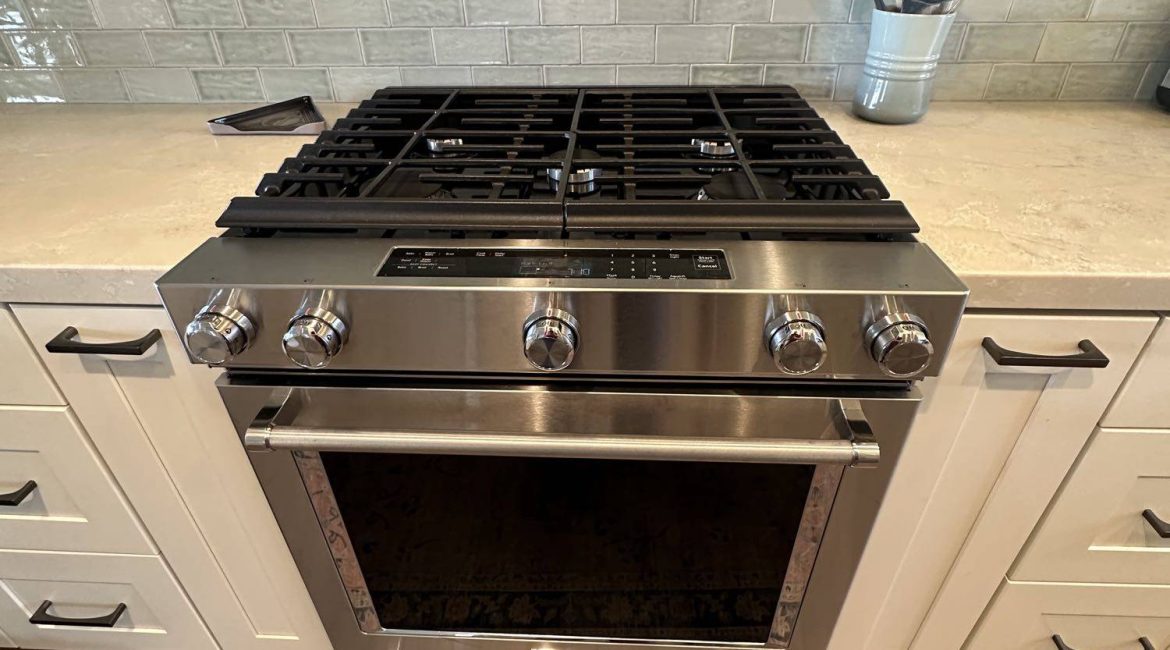
A gas stove should produce a steady, blue flame that distributes heat evenly across the cookware. When the flame becomes weak, flickers, or burns unevenly, it points to a disruption either in how gas is delivered or how it mixes with air at the burner. This issue often develops gradually, which makes it easy to overlook until cooking performance noticeably declines.
One of the most common causes is partial blockage inside the burner assembly. Over time, food residue, grease, and cleaning chemicals accumulate in the burner ports—the small openings where gas exits and ignites. Even a thin layer of buildup can restrict gas flow, causing the flame to shrink or split into irregular patterns. Instead of forming a consistent ring, the flame may appear patchy, with some sections burning stronger than others.
Clogged burner ports also affect how gas mixes with oxygen. Proper combustion depends on a balanced mixture. When airflow is disrupted, the flame can turn yellow or orange instead of blue, indicating incomplete combustion. This not only reduces heating efficiency but may also lead to soot formation on cookware.
Another factor to consider is the alignment of burner components. After cleaning or routine use, the burner cap or head may shift slightly out of position. Even a small misalignment changes how gas is distributed, leading to uneven ignition and inconsistent flame height. This is especially common in stoves with removable burner caps that are not seated correctly after maintenance.
Beyond surface-level issues, weak flames can indicate problems with gas pressure. Gas appliances rely on a stable supply regulated by valves and internal components. If the pressure drops below the required level, the flame will struggle to maintain strength. This can happen due to a malfunctioning regulator, partially closed gas valves, or issues within the household gas line.
In some cases, the problem may originate from the control valve associated with the burner. This component adjusts the flow of gas when you turn the knob. Wear or internal debris can prevent the valve from opening fully, limiting the amount of gas reaching the burner. As a result, even at maximum setting, the flame remains low.
Moisture is another overlooked contributor. After cleaning the stove, water can seep into burner ports or internal channels. Until it fully evaporates, it interferes with gas flow and ignition, causing irregular flames or delayed lighting. If the issue appears immediately after cleaning, allowing the components to dry thoroughly may resolve it.
It is also important to distinguish between a single-burner issue and a stove-wide problem. If only one burner is affected, the cause is likely localized—such as clogging or misalignment. If multiple burners show weak or uneven flames, the issue may be related to gas pressure, the regulator, or the main supply line.
Ignoring these signs can lead to more than inconvenience. Inefficient combustion increases gas consumption and extends cooking time. More importantly, incomplete burning of gas may produce carbon monoxide, which poses a safety risk in poorly ventilated spaces.
Routine maintenance can prevent many of these problems. Regularly cleaning burner caps and ports helps maintain proper gas flow. It is best to use non-abrasive cleaning methods and ensure all parts are completely dry before reassembly. Checking that each component sits correctly in place also reduces the likelihood of uneven flames.
However, when cleaning and basic adjustments do not resolve the issue, deeper inspection is required. Gas pressure irregularities, faulty valves, or internal blockages should be handled by trained technicians. Attempting to disassemble gas components without proper knowledge can lead to leaks or further damage.
A technician will typically begin with a pressure test to confirm whether the gas supply meets the appliance’s specifications. If pressure is inconsistent, the regulator or supply line may need adjustment or replacement. The technician may also inspect and clean internal burner channels, ensuring that gas flows freely from the valve to the ignition point.
In addition, professionals can identify early signs of wear in critical components. Replacing a worn valve or regulator before it fails completely can prevent more extensive repairs and reduce safety risks.
Consistent flame performance is not just about convenience—it reflects the overall condition of the appliance. A stable, even flame ensures predictable cooking results, efficient fuel use, and safe operation.
If your gas stove flame has become weak or uneven, it is worth addressing the issue before it escalates. The specialists at Poway Appliance Repair Service Center have the tools and experience to diagnose both surface-level and internal problems accurately. From thorough burner cleaning to gas pressure calibration and component replacement, their team ensures your stove operates as intended. Schedule a service appointment to restore reliable performance and maintain a safe kitchen environment.
Contact us